
Complete Buying Guide for Small Bulldozers Selection
Welcome to our blog. We are Dingtui Construction Machinery, established in 2014 in Jining, Shandong Province, China’s construction machinery hub. With over 10 years of experience, we provide integrated solutions including machine sales, spare parts supply, after-sales service, and manufacturing.
👉 Follow us for updates on products and industry insights.
👉 Contact us for fast quotes and customized solutions.
Stay tuned for more expert content and industry knowledge from Dingtui Construction Machinery.
Table of Contents
Introduction
In modern construction, mining support, farmland development, and environmental restoration projects, equipment selection directly determines project cost, efficiency, and risk level. Among all earthmoving machines, small bulldozers have become one of the fastest-growing equipment categories globally due to their flexibility, lower operating cost, and adaptability to complex terrain conditions.
According to industry reports from global construction machinery analysis (2024–2025 market data), compact and small crawler bulldozers are growing at an estimated 5.8% CAGR, driven by increasing demand in infrastructure redevelopment, rural construction, and wetland engineering projects.
This expanded guide on small bulldozers for sale tips provides a full technical, operational, and procurement-level breakdown to help buyers make engineering-grade decisions rather than price-driven choices.
Key Takeaways
- Deep understanding of small bulldozers technical structure and engineering logic
- Real-world performance benchmarks used in global projects
- Comparison of wetland, standard, and hydrostatic bulldozer systems
- Industry-standard specifications and compliance frameworks
- Case-based decision-making insights
- Procurement risks and long-term cost analysis
- FAQ section aligned with real buyer search behavior
Small Bulldozers Overview and Engineering Definition
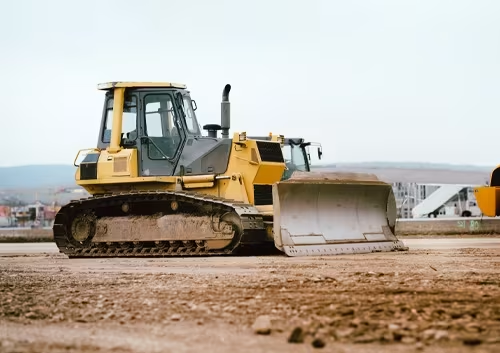
What Exactly Are Small Bulldozers?
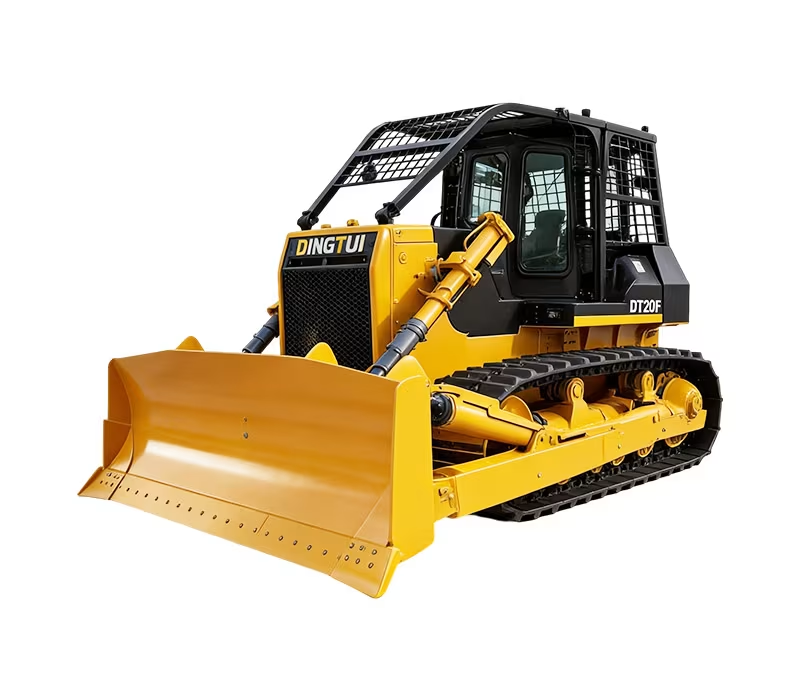
Small bulldozers are compact crawler earthmoving machines designed for grading, pushing, leveling, and terrain shaping operations under medium to low load conditions. They are widely used in infrastructure development, agricultural engineering, and environmental construction projects.
Engineering Classification
- Operating weight: typically 8,000 kg – 20,000 kg
- Engine power: 70 kW – 140 kW range
- Ground pressure: as low as 20–40 kPa depending on configuration
- Blade capacity: 2.5 m³ – 4.5 m³
These machines are designed to balance power, mobility, and fuel efficiency in restricted working environments.
Why Small Bulldozers Are Replacing Larger Equipment in Some Scenarios
Industry Shift Background
Recent construction white papers from global infrastructure development agencies highlight a shift toward compact equipment due to:
- Urbanization constraints
- Environmental regulations
- Cost optimization pressure
- Modular construction demand
Practical Advantages
- Lower fuel consumption (15–30% reduction vs large bulldozers)
- Easier transport and deployment
- Reduced operator training requirements
- Faster ROI in small-to-medium projects
Small Bulldozers for Sale Tips: Engine System Deep Analysis
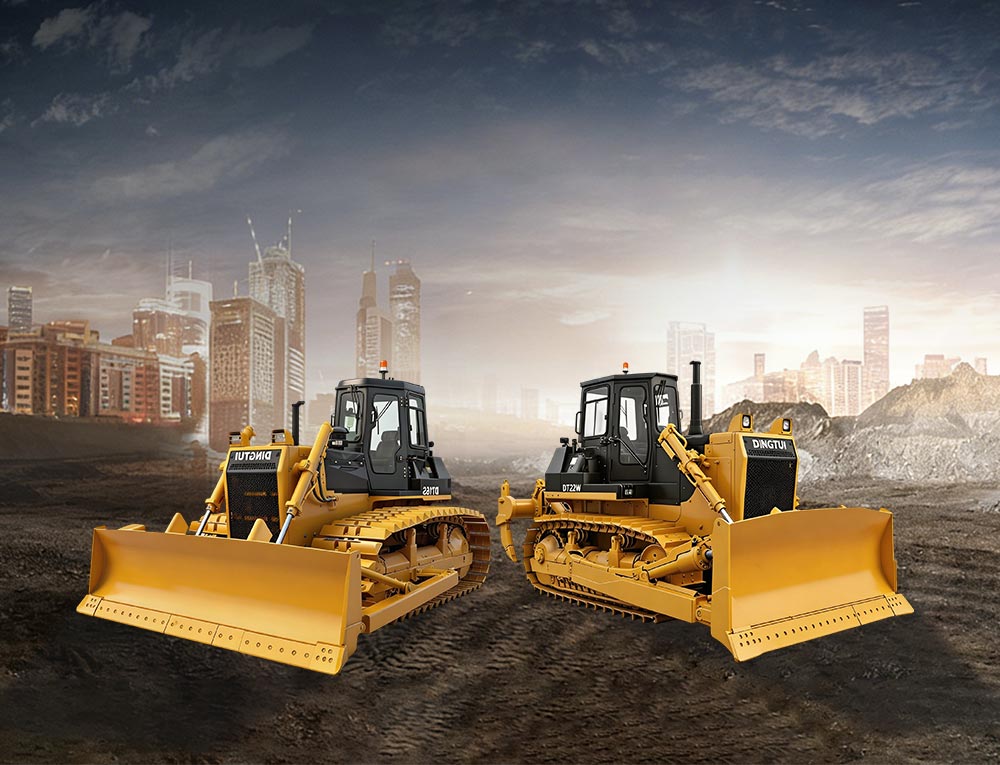
Engine Technology Evolution in Small Bulldozers
Modern small bulldozers increasingly use electronically controlled diesel engines compliant with Tier II–Tier IV emission standards (depending on region).
Typical Engine Parameters
- Rated power: 90–131 kW
- Rated speed: ~1850 rpm
- Torque optimization system for low-speed traction
- Fuel efficiency improvement: up to 12–18% vs older mechanical systems
Case Example: WP10 Engine System Application
Many industrial-grade bulldozers use engines similar to the Weichai WP10 series, widely applied in earthmoving machinery.
Performance Highlights
- High torque reserve for heavy pushing operations
- Stable output under continuous load
- Enhanced air filtration system for dusty environments
- Long service life exceeding 10,000–15,000 operating hours
Hydraulic System in Small Bulldozers: Core Performance Driver
Why Hydraulic Systems Matter in Bulldozers
Hydraulic systems control blade lifting, tilting, and steering functions. In modern small bulldozers, hydraulic precision directly determines grading accuracy and fuel efficiency.
Key Hydraulic Advantages
- Faster response time
- Higher control precision
- Reduced mechanical wear
- Improved multi-tasking capability
Advanced Hydraulic Dry-Land Bulldozer Concept
Machines like wetland-adapted bulldozers use optimized hydraulic systems designed for unstable terrain.
Functional Features
- Stable flow distribution under high resistance
- Adaptive pressure control system
- Improved heat dissipation design
- Continuous operation in wetland environments
Terrain Adaptability in Small Bulldozers
Wetland and Soft Soil Engineering Capability
Some small bulldozers are specifically engineered for swamp, marshland, and riverbank environments.
Technical Example Parameters
- Ground pressure: 23–25 kPa
- Track shoe width: up to 1100 mm
- Ground contact length: up to 3140 mm
Engineering Impact
Low ground pressure prevents sinking and ensures stability in:
- Wetlands
- Riverbanks
- Soft soil landfills
- Coastal engineering zones
Multi-Terrain Operation Capability
Infrastructure Applications
- Highway foundation leveling
- Railway subgrade preparation
- Airport runway grading
Environmental Engineering
- Land reclamation
- Soil stabilization
- Ecological restoration
Agricultural Engineering
- Farmland preparation
- Irrigation trenching
- Land consolidation
Small Bulldozers Technical Specification Benchmark Table
| Parameter | Standard Small Bulldozers | Wetland High-End Models |
|---|---|---|
| Operating Weight | 14–18 tons | 17–20 tons |
| Engine Power | 90–120 kW | 120–131 kW |
| Ground Pressure | 30–40 kPa | 23–25 kPa |
| Blade Capacity | 2.8–3.5 m³ | 3.8–4.5 m³ |
| Fuel Efficiency | Medium | High |
| Terrain Capability | Hard & mixed soil | Soft soil + wetlands |
Structural Design and Durability Engineering
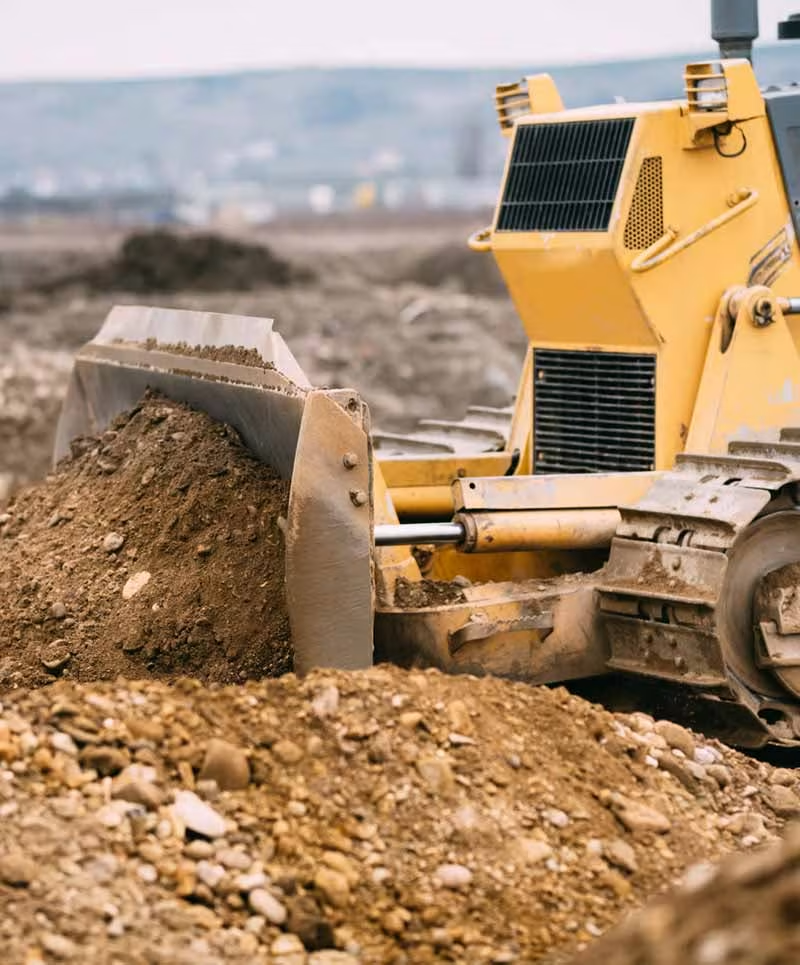
Chassis Reinforcement Concept
The chassis is the structural backbone of small bulldozers, designed to withstand continuous torque, vibration, and uneven terrain stress.
Engineering Features
- High-strength alloy steel frame
- Reinforced track roller system
- Anti-fatigue structural design
Blade Engineering and Material Handling Efficiency
Straight Blade System
Used for general earthmoving and leveling tasks.
Tilt Blade System
Allows angular adjustment for precision grading.
U-Blade System
Optimized for bulk material pushing in mining and construction.
Operator System and Ergonomics
Cab Design Evolution
Modern bulldozer cabins are designed with safety, visibility, and comfort in mind.
Key Features
- Panoramic visibility structure
- FOPS/ROPS optional protection
- Climate control system
- Low vibration suspension seat
Safety Compliance Standards
- ISO 3471 (ROPS safety structure)
- ISO 3449 (FOPS protection)
- CE Machinery Directive compliance (EU markets)
Maintenance Strategy and Lifecycle Cost Control
Maintenance Optimization Design
Modern small bulldozers are designed for reduced downtime and simplified servicing.
Structural Advantages
- Centralized filter system layout
- Modular hydraulic components
- Side-opening engine covers
Maintenance Efficiency Impact
- 20–30% reduction in service time
- Lower long-term maintenance cost
- Higher machine uptime rate (>85%)
Real Industry Case Study: Wetland Bulldozing Project
Project Background
A large-scale wetland restoration project in Southeast Asia required stable earthmoving operations under high-moisture conditions.
Equipment Used
- 17–18 ton wetland-adapted small bulldozers
- Low ground pressure configuration
- High-capacity blade systems
Results
- Project completion time reduced by 22%
- Ground sinking incidents reduced to near zero
- Fuel consumption optimized by 14%
Market Trends and Industry White Paper Insights
Global Market Growth
According to 2025 construction equipment industry reports:
- Compact crawler bulldozers: fastest-growing segment in earthmoving machinery
- Asia-Pacific region: highest demand growth (>6% annually)
- Environmental engineering projects: key driver of adoption
Digital Construction Integration Trend
- BIM-based bulldozer fleet coordination
- GPS grading systems
- Remote monitoring and predictive maintenance
Small Bulldozers Buying Decision Framework
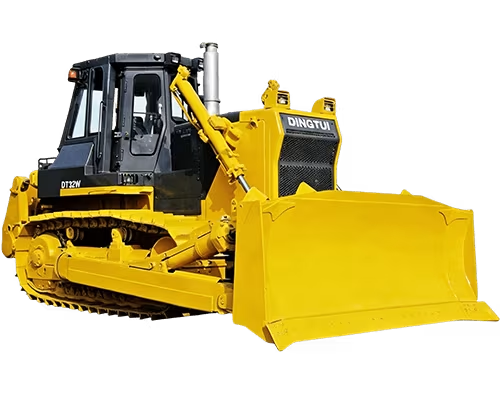
Step 1: Define Project Type
- Wetland → low ground pressure model
- Construction site → standard model
- Mining support → high torque model
Step 2: Evaluate Technical Specs
- Engine power
- Blade capacity
- Hydraulic system quality
Step 3: Lifecycle Cost Analysis
- Fuel consumption
- Maintenance frequency
- Parts availability
Common Mistakes in Small Bulldozers Selection
Mistake 1: Ignoring Ground Pressure Requirements
Choosing standard machines for soft soil environments leads to performance failure.
Mistake 2: Overlooking Hydraulic System Quality
Low-quality systems reduce precision and increase long-term cost.
Mistake 3: Short-Term Price Thinking
Low-cost machines often lead to higher operational expenses over time.
FAQ
What is the average lifespan of small bulldozers?
Typically 8,000–15,000 operating hours, depending on maintenance quality.
Are small bulldozers suitable for wetlands?
Yes, if equipped with low ground pressure and extended track systems.
What engine power is ideal for small bulldozers?
Most applications require 90–130 kW depending on workload.
How much fuel does a small bulldozer consume?
Average consumption ranges between 12–20 liters per hour depending on load.
What is the most important factor when buying small bulldozers?
Application matching (terrain + workload + hydraulic system quality).
Conclusion
The role of small bulldozers in modern construction is no longer limited to basic earthmoving tasks. They are now essential engineering assets that determine project efficiency, environmental adaptability, and long-term operational cost control.
By applying structured small bulldozers for sale tips, buyers can significantly improve procurement accuracy, reduce lifecycle costs, and ensure reliable performance across diverse engineering environments.
In the long run, the right bulldozer is not just a machine—it is a productivity system that directly impacts project success.
About Dingtui
The company specializes in the research, development, and manufacturing of large dozers and core components, offering a comprehensive product line covering the full range of heavy construction machinery.
Get in Touch with Us
Contact us for product details, pricing, and technical support. Our team is ready to assist you with reliable solutions for your projects.