
Small Bulldozer 2026 Buying Guide
Welcome to our blog. We are Dingtui Construction Machinery, established in 2014 in Jining, Shandong Province, China’s construction machinery hub. With over 10 years of experience, we provide integrated solutions including machine sales, spare parts supply, after-sales service, and manufacturing.
👉 Follow us for updates on products and industry insights.
👉 Contact us for fast quotes and customized solutions.
Stay tuned for more expert content and industry knowledge from Dingtui Construction Machinery.
Table of Contents
Key Highlights of This Guide
- Understand what a small bulldozer is and how it works in engineering projects
- Learn core structure, hydraulic system, and crawler chassis design principles
- Compare small bulldozer vs medium and wetland bulldozer systems
- Explore real-world applications in soft soil, forestry, and infrastructure
- Analyze technical parameters, performance systems, and operational efficiency
- Review procurement decision factors and lifecycle cost logic
- Understand operator safety, maintenance design, and durability structure
- Get a structured FAQ based on real buyer search intent
Introduction
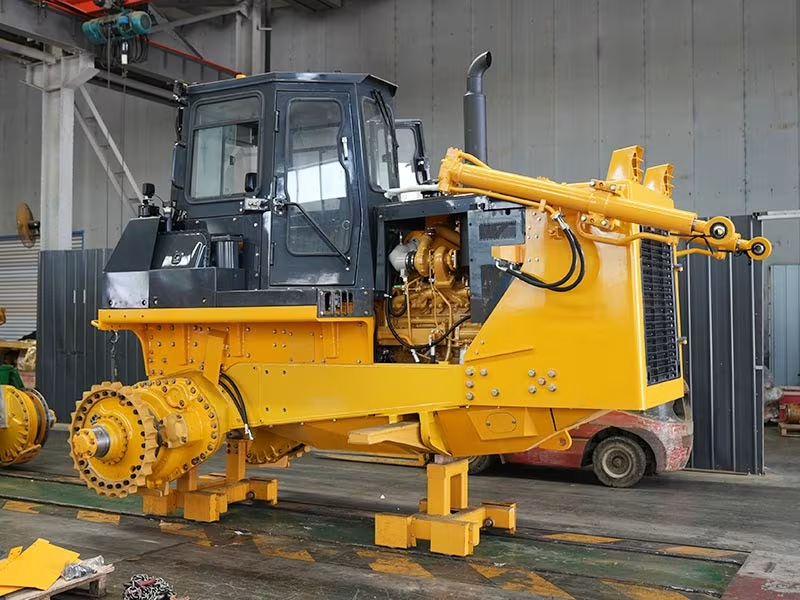
Modern construction and land development projects increasingly require machines that combine mobility, stability, and adaptability. In this context, the small bulldozer has become a critical solution for projects where large machines are inefficient or impractical.
Unlike heavy earthmoving equipment, a small bulldozer is designed for:
- Soft soil environments
- Narrow or restricted construction sites
- Wetlands, farmland, and mixed terrain
- Light-to-medium earthmoving operations
Recent engineering deployment trends show that compact crawler systems are increasingly replacing traditional mid-size equipment in rural infrastructure, ecological restoration, and small-scale industrial construction.
What Is a Small Bulldozer? Engineering Concept Explained
Small Bulldozer Definition
A small bulldozer is a crawler-type earthmoving machine designed for lightweight to medium-duty pushing, leveling, and terrain shaping tasks.
It integrates:
- Hydraulic control system
- Compact crawler chassis
- High-efficiency engine system
- Multi-terrain adaptability design
Core Engineering Concept of Small Bulldozer
Low Ground Pressure Design
Small bulldozers distribute weight evenly across wide tracks to reduce soil sinking.
Hydraulic Precision Control
Hydraulic systems enable smooth blade movement and accurate grading.
Multi-Terrain Mobility System
Crawler structure improves traction on soft soil, mud, and uneven terrain.
Small Bulldozer Structural System Overview
Hydraulic Power System
The hydraulic power system is the core working mechanism of a small bulldozer, responsible for controlling blade lift, tilt, and pushing force distribution.
Key Function
It converts engine output into controlled hydraulic energy, which drives precise mechanical movement for earthmoving operations.
This system allows:
- Fine adjustment of blade angles
- Consistent pushing force across different soil types
- Improved grading accuracy in finishing operations
Crawler Chassis System
Wide Track Design Principle
Wide track shoes increase surface contact area and reduce ground pressure.
Stability Enhancement Concept
Long ground contact length improves machine balance during operation.
Engine Performance System
Small bulldozers often use diesel engines optimized for:
- Torque stability
- Fuel efficiency
- Continuous operation performance
Small Bulldozer vs Medium Bulldozer
Technical Comparison Table
| Feature | Small Bulldozer | Medium Bulldozer | Wetland Bulldozer |
|---|---|---|---|
| Size | Compact | Standard | Large |
| Ground Pressure | Low | Medium | Very Low |
| Mobility | High | Medium | Specialized |
| Terrain Adaptability | Good | Good | Excellent (wetland) |
| Fuel Consumption | Low | Medium | High |
| Application Scope | Small projects | General construction | Soft terrain engineering |
Concept Comparison
Compact Efficiency vs Heavy Power
Small bulldozers prioritize efficiency and maneuverability over extreme pushing force.
Terrain Adaptation Strategy
Wetland bulldozers specialize in soft soil, while small bulldozers balance multiple working environments.
Small Bulldozer Working Principle
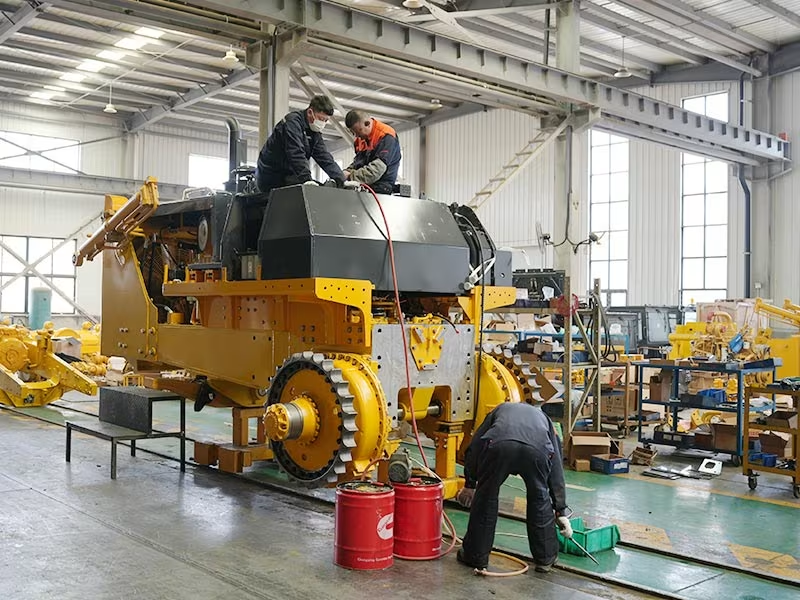
Earthmoving Process Flow
- Blade engages soil
- Hydraulic system applies controlled push force
- Crawler system stabilizes movement
- Material is transported or leveled
Operational Concept: Continuous Terrain Shaping
Small bulldozers are optimized for continuous grading rather than deep excavation.
This makes them highly efficient in:
- Surface leveling
- Road base preparation
- Site finishing work
Application Scenarios of Small Bulldozer
Infrastructure Construction
Used in:
- Roadbed leveling
- Foundation preparation
- Small-scale excavation
Agricultural Engineering
Concept: Land Optimization System
Small bulldozers improve farmland usability through leveling and soil redistribution.
Forestry and Environmental Projects
Used for:
- Forest road construction
- Ecological restoration
- Land clearing operations
Soft Soil and Wetland Support
Based on hydraulic crawler design, small bulldozers can operate in:
- Marshland areas
- Riverbanks
- Soft soil terrain
Technical Parameter Overview
| Parameter | Description |
|---|---|
| Operating Weight | Compact to medium range |
| Engine Power | Medium-output diesel system |
| Ground Pressure | Low to protect soil structure |
| Blade Type | Straight / tilt blade systems |
| Track Width | Wide for stability |
| Speed Range | Low-speed controlled operation |
Concept Modules: Small Bulldozer Engineering Design Logic
Low Ground Pressure System
The low ground pressure system is a core engineering principle in small bulldozer design. It reduces the risk of machine sinking in soft soil environments and ensures stable traction during continuous earthmoving operations.
By distributing machine weight evenly across wide crawler tracks, the system helps:
- Maintain stability on muddy or loose terrain
- Reduce soil deformation during operation
- Improve climbing and pushing efficiency on uneven surfaces
This design is particularly important in agricultural land development, wetland preparation, and soft foundation construction projects where ground stability is limited.
Hydraulic Blade Control System
The hydraulic blade control system is responsible for precision movement during grading and pushing operations.
It ensures:
- Accurate blade angle adjustment
- Smooth lifting and lowering control
- Consistent soil displacement under varying load conditions
In practical engineering scenarios, this system significantly improves finishing quality, especially in roadbed leveling and site preparation tasks where surface accuracy is critical.
Reinforced Frame Structure
The reinforced frame structure is designed to withstand continuous mechanical stress generated during long-duration construction operations.
Key engineering benefits include:
- Improved resistance to torsional force
- Enhanced durability under heavy-duty pushing cycles
- Extended machine service life in harsh environments
This structural reinforcement is essential for maintaining operational stability in mining support, infrastructure grading, and land reclamation projects.
Small Bulldozer Procurement Decision Guide
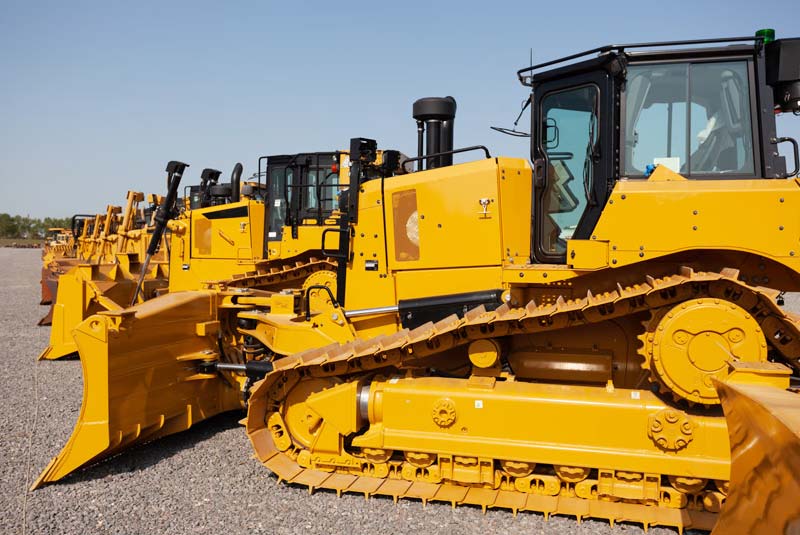
Buyer Search Questions
- “What is the best small bulldozer for soft ground?”
- “How much does a small bulldozer cost?”
- “Is a small bulldozer suitable for farmland leveling?”
- “Which crawler bulldozer is best for wet soil?”
Selection Checklist
Terrain Type Analysis
Identify soil hardness and moisture content before selection.
Workload Classification
Define whether tasks are light grading or continuous pushing.
Engine Power Matching
Ensure power output matches project scale.
Operator Safety and Comfort System
Cab Design Concept
Wide Visibility Structure
Hexagonal cab design improves operational field of view.
Safety Protection System
Optional FOPS/ROPS structures improve operator safety.
Environmental Control System
Air conditioning systems ensure comfortable operation in different climates.
Maintenance and Reliability System
Easy Maintenance Design Concept
Key components are arranged for:
- Fast inspection
- Reduced downtime
- Simplified servicing
Durability Engineering Principle
Reinforced chassis ensures long-term reliability under heavy use cycles.
Real Engineering Case Applications
Case 1: Rural Road Construction
Small bulldozers are used for road leveling in rural infrastructure projects.
Case 2: Wet Soil Agricultural Land Preparation
Machines operate in soft farmland environments for leveling and drainage optimization.
Case 3: Forestry Access Road Development
Used for clearing and shaping forest access routes with limited space.
Conclusion
The small bulldozer plays a crucial role in modern construction ecosystems where flexibility, terrain adaptability, and cost efficiency are essential. Compared with larger machines, it provides a balanced solution for small-to-medium engineering projects.
As infrastructure development becomes more diversified in 2026, compact crawler systems will continue to expand their role in agriculture, municipal engineering, forestry, and environmental restoration projects.
FAQ
What is a small bulldozer used for?
It is used for grading, leveling, and light earthmoving in construction, agriculture, and forestry.
Is a small bulldozer good for soft soil?
Yes. Its crawler system and low ground pressure make it suitable for soft terrain.
What is the difference between a small bulldozer and excavator?
A small bulldozer pushes and levels material, while an excavator digs and loads.
Can a small bulldozer be used in wetlands?
Yes, but wetland-specific models perform better in extremely soft conditions.
How long does a small bulldozer last?
With proper maintenance, it can operate efficiently for long service cycles.
What is the main advantage of small bulldozer?
Its main advantage is flexibility combined with low ground pressure and operational efficiency.
About Dingtui
The company specializes in the research, development, and manufacturing of large dozers and core components, offering a comprehensive product line covering the full range of heavy construction machinery.
Get in Touch with Us
Contact us for product details, pricing, and technical support. Our team is ready to assist you with reliable solutions for your projects.