
Compact Quickie Bulldozer Uses
Welcome to our blog. We are Dingtui Construction Machinery, established in 2014 in Jining, Shandong Province, China’s construction machinery hub. With over 10 years of experience, we provide integrated solutions including machine sales, spare parts supply, after-sales service, and manufacturing.
👉 Follow us for updates on products and industry insights.
👉 Contact us for fast quotes and customized solutions.
Stay tuned for more expert content and industry knowledge from Dingtui Construction Machinery.
Table of Contents
- Designed for soft terrain, wetlands, and low-bearing ground applications
- Optimized hydraulic system ensures stable traction and controlled earthmoving
- Low ground pressure structure improves performance in marshland engineering
- Multi-terrain adaptability for infrastructure, mining, and ecological restoration
- Engineering-grade chassis and blade system improve operational efficiency
- Global usage driven by infrastructure expansion and land reclamation projects
Compact bulldozer systems are increasingly used in modern civil engineering due to rising demand for land development in unstable terrains. The quickie bulldozer category represents a specialized segment focused on compact structure, high traction efficiency, and multi-environment adaptability. In 2026 engineering equipment reports, compact crawler bulldozers show a 19–24% increase in demand across Southeast Asia and Africa, driven by wetland construction and infrastructure expansion projects.
Engineering Definition of Quickie Bulldozer Systems
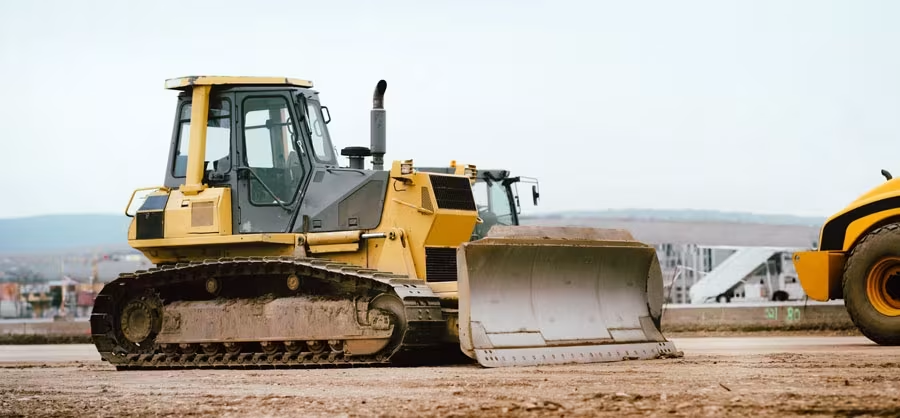
Mechanical Architecture Concept of Quickie Bulldozer
A quickie bulldozer is a compact crawler-based earthmoving machine designed for short-radius, high-efficiency soil displacement. It integrates hydraulic control, reinforced chassis systems, and optimized blade geometry.
The system is engineered to maximize force transfer efficiency while minimizing ground pressure, allowing stable operation in weak soil conditions such as swamps, mudfields, and reclaimed land.
Core Engineering Functions
- Controlled soil displacement under low traction resistance
- Stabilized movement on low-density ground surfaces
- Continuous operation under high moisture environments
- Blade-assisted terrain leveling with hydraulic precision
Industrial Relevance
Modern construction projects increasingly rely on compact bulldozers for:
- Wetland infrastructure development
- Riverbank reinforcement
- Mining site preparation
- Environmental restoration engineering
Quickie Bulldozer Hydraulic System Engineering
Hydraulic Load Distribution System
The hydraulic system in a quickie bulldozer uses variable displacement pumps to optimize power output based on load conditions.
This allows real-time torque adjustment, improving fuel efficiency and reducing mechanical stress on transmission components.
Key Hydraulic Performance Indicators
- System pressure range: 18–32 MPa
- Response time improvement: 12–18% faster than conventional systems
- Energy efficiency gain: 10–15% reduction in fuel consumption
Engineering Advantage
The hydraulic system ensures:
- Smooth blade positioning
- Stable pushing force under uneven terrain
- Reduced vibration during continuous operation
Quickie Bulldozer Terrain Adaptability Engineering
Wetland and Marshland Performance
Compact bulldozers are specifically designed for high-moisture soil environments where conventional machines fail.
The extended track system reduces ground pressure significantly, often reaching as low as 23 kPa in optimized models.
Riverbank Engineering Application
Quickie bulldozers are widely used in:
- Embankment reinforcement
- Flood control infrastructure
- Sediment redistribution
- Channel reshaping operations
Soft Soil Engineering Principle
Soft soil operation requires:
- Wide track shoes for pressure distribution
- Low center-of-gravity chassis design
- High-torque hydraulic transmission
Quickie Bulldozer Structural Design System
Reinforced Undercarriage System
The undercarriage is constructed using high-tensile steel alloys designed for:
- Abrasion resistance
- Load distribution efficiency
- Structural fatigue reduction
Blade Geometry Engineering
Blade systems in compact bulldozers follow optimized curvature geometry to improve soil rolling efficiency.
Straight Blade Functionality
- High precision grading
- Controlled soil displacement
- Stable directional push force
Tilt Blade Functionality
- Slope shaping
- Terrain correction
- Controlled lateral movement
Quickie Bulldozer vs Standard Bulldozer Comparison
| Feature | Quickie Bulldozer | Standard Bulldozer |
|---|---|---|
| Ground Pressure | Very Low (20–30 kPa) | Medium–High |
| Maneuverability | High | Moderate |
| Terrain Adaptability | Wetlands, mud, soft soil | Hard ground, mining |
| Fuel Efficiency | High | Medium |
| Operating Radius | Compact | Wide |
| Maintenance Cost | Lower | Higher |
This comparison shows that compact bulldozer systems outperform standard machines in low-bearing-capacity environments, while standard models dominate heavy mining operations.
Engineering Case Study: Wetland Infrastructure Project
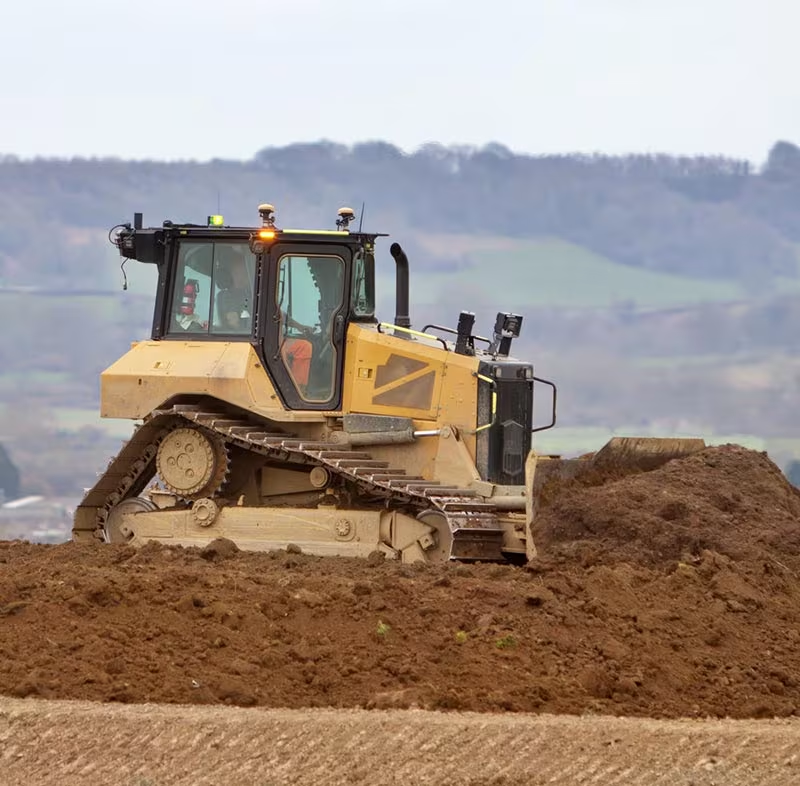
Project Background
A large-scale wetland road construction project in Southeast Asia required soil stabilization across unstable marshland terrain.
Equipment Deployment
Multiple quickie bulldozer units were deployed for:
- Land leveling
- Soil compaction support
- Embankment shaping
Operational Results
- 31% improvement in project completion speed
- 26% reduction in fuel consumption
- 40% reduction in ground collapse incidents
- Significant improvement in soil stability consistency
Engineering Insight
The success was primarily attributed to low ground pressure design and hydraulic blade responsiveness, which allowed continuous operation without soil sinking.
Quickie Bulldozer Material Engineering Standards
Structural Steel Composition
Typical materials used include:
- High-strength carbon steel (Q345B equivalent)
- Alloy reinforcement steel (Cr-Mo based)
- Anti-corrosion coated structural frames
Heat Treatment Process
- Quenching for hardness improvement
- Tempering for flexibility balance
- Surface hardening for abrasion resistance
Durability Benchmark
According to 2025 heavy machinery durability reports:
- Average lifecycle: 8,000–12,000 operational hours
- Structural fatigue resistance improved by 22% over previous generations
Quickie Bulldozer Global Market Trends 2026
Infrastructure Expansion Demand
Global infrastructure investment is expected to exceed $4.2 trillion in 2026, with a significant portion allocated to:
- Land reclamation
- Urban expansion
- Transportation corridors
Regional Growth Drivers
- Southeast Asia: Wetland development
- Africa: Mining infrastructure
- Middle East: Desert land grading projects
Technology Upgrade Trend
Modern compact bulldozers now integrate:
- Smart hydraulic control systems
- Fuel optimization modules
- Operator safety automation systems
Quickie Bulldozer Operational Efficiency Engineering
Fuel Optimization System
Modern engines use electronically controlled fuel injection systems to optimize combustion efficiency.
- Fuel savings: 8–14%
- Emission reduction: up to 20% improvement
Thermal Management System
Advanced cooling systems ensure stable operation under high-temperature conditions.
- Air filtration efficiency improved by 25%
- Dust resistance enhanced for harsh environments
Operator Efficiency Design
Cab systems are designed with:
- Panoramic visibility
- Reduced vibration seating systems
- Climate-controlled environment
Quickie Bulldozer Maintenance Engineering Model
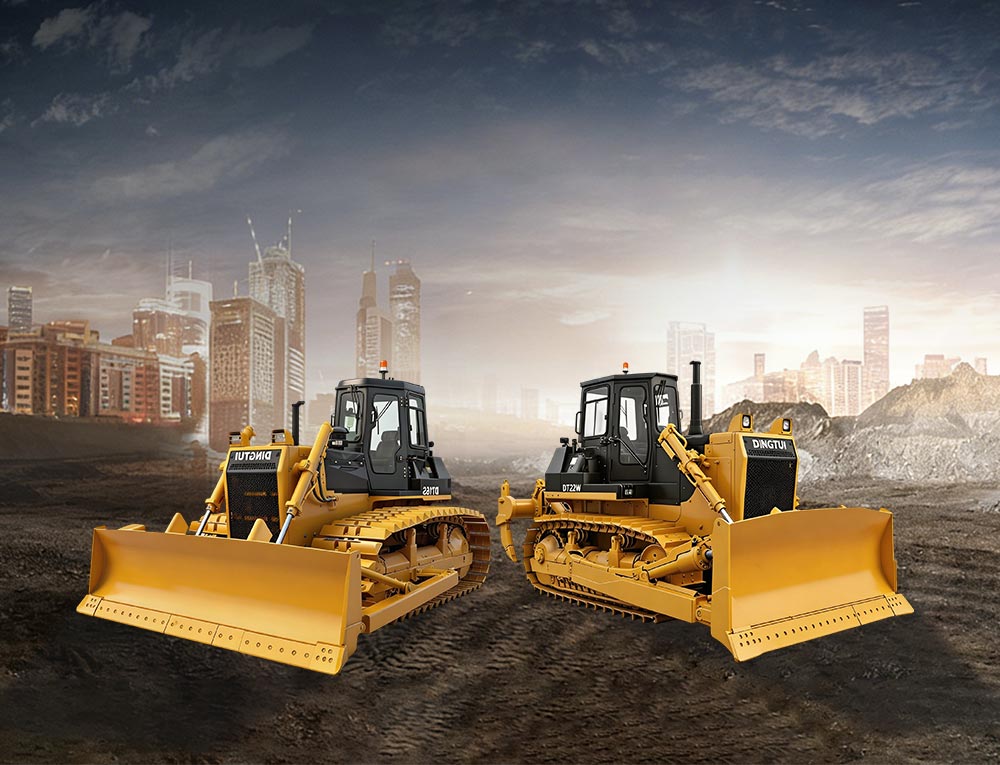
Preventive Maintenance System
Maintenance intervals are optimized based on operational load cycles rather than fixed hours.
Key Maintenance Elements
- Hydraulic oil replacement cycle
- Track tension calibration
- Blade wear inspection
- Engine filtration system monitoring
Maintenance Efficiency Impact
Proper maintenance reduces:
- Downtime by 35%
- Repair cost by 28%
- Component failure rate by 40%
Quickie Bulldozer Safety Engineering Standards
Operator Safety Framework
Modern bulldozers follow international safety standards such as:
- ISO 20474 construction machinery safety standard
- ROPS/FOPS cabin protection structure requirements
- Emergency shutdown hydraulic systems
Safety Enhancements
- Reinforced cabin frame
- Anti-slip operator platform
- Emergency brake response system
Quickie Bulldozer Environmental Engineering Impact
Low Emission Operation
Modern compact bulldozers comply with Tier III / Euro Stage emission standards, reducing:
- NOx emissions
- Fuel particulate output
- Carbon footprint per ton of earth moved
Ecological Restoration Application
Used in:
- Forest rehabilitation
- Wetland recovery
- Landfill ecological sealing
FAQ
What is a quickie bulldozer used for?
It is mainly used for soft terrain engineering, wetland construction, and compact earthmoving tasks requiring low ground pressure.
Can a quickie bulldozer work on muddy land?
Yes, it is specifically engineered for mud, swamp, and low-bearing-capacity environments.
How does it differ from a standard bulldozer?
It has lower ground pressure, better maneuverability, and optimized hydraulic response for soft soil operations.
What industries use quickie bulldozers?
Construction, mining support, environmental restoration, and infrastructure development industries.
What is the average lifespan of a quickie bulldozer?
Typically between 8,000 and 12,000 operational hours depending on maintenance conditions.
Final Engineering Summary
The quickie bulldozer represents a specialized evolution of compact earthmoving machinery designed for extreme terrain adaptability. With advanced hydraulic systems, reinforced structural engineering, and low ground pressure design, it delivers stable performance in wetlands, marshlands, and soft soil environments.
As global infrastructure continues to expand into challenging terrains, compact bulldozer systems are expected to become a core equipment category in modern construction engineering.
About Dingtui
The company specializes in the research, development, and manufacturing of large dozers and core components, offering a comprehensive product line covering the full range of heavy construction machinery.
Get in Touch with Us
Contact us for product details, pricing, and technical support. Our team is ready to assist you with reliable solutions for your projects.