
Best Bulldozer for Mining: How to Choose the Right Machine
Welcome to our blog. We are Dingtui Construction Machinery, established in 2014 in Jining, Shandong Province, China’s construction machinery hub. With over 10 years of experience, we provide integrated solutions including machine sales, spare parts supply, after-sales service, and manufacturing.
👉 Follow us for updates on products and industry insights.
👉 Contact us for fast quotes and customized solutions.
Stay tuned for more expert content and industry knowledge from Dingtui Construction Machinery.
Table of Contents
Choosing the best Bulldozer for mining is not simply a matter of buying the largest machine available. Open-pit mines, quarries and mineral development projects place very different demands on power, traction, ground pressure, cooling, attachments and undercarriage durability.
Key takeaways from this guide:
- Match machine size to material type, pushing distance and production targets.
- Choose a crawler model for traction and stability on rough mine surfaces.
- Consider a rock configuration when working with abrasive or high-impact material.
- Select the blade according to whether the machine will grade, spread or carry material.
- Add a ripper when compacted ground or fractured rock must be loosened.
- Evaluate the undercarriage, cooling package and service access before comparing prices.
- Calculate lifecycle cost rather than choosing equipment by purchase price alone.
- Confirm parts availability and after-sales support before importing a machine.
What Does a Bulldozer Do in Mining?
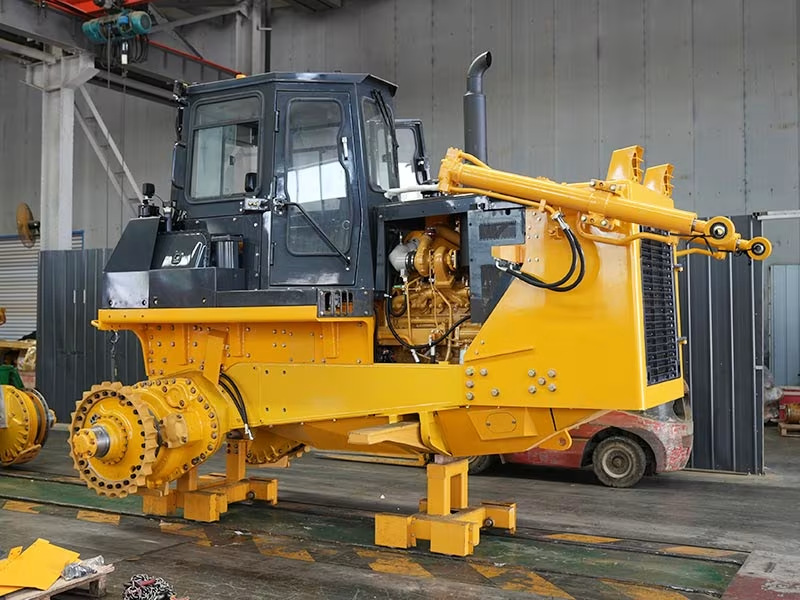
A Bulldozer is a tracked or wheeled earthmoving machine equipped with a front blade for pushing, spreading and leveling material. Many mining configurations also use a rear ripper to loosen compacted soil, weathered rock or other dense material before pushing.
In surface mining, these machines are commonly used for:
- Clearing vegetation and topsoil
- Preparing drilling and extraction areas
- Supporting overburden removal
- Building and maintaining haul roads
- Leveling dumping areas
- Managing stockpiles
- Cleaning around loading points
- Spreading waste material
- Reclaiming disturbed land
- Assisting other heavy equipment
The U.S. Geological Survey identifies surface, underground and placer mining as the principal mineral extraction methods. Bulldozers are particularly valuable in surface operations, where continuous ground preparation and material management are required.
Pushing and Spreading
Pushing is the machine’s primary function. Its blade moves soil, broken rock, coal, aggregate or waste across relatively short distances.
Spreading involves distributing dumped material into controlled layers. This is important around spoil piles, stockyards and road-building areas.
Ripping
Ripping is the process of breaking compacted or moderately hard material with one or more rear-mounted shanks. It can reduce dependence on drilling or blasting where ground conditions allow mechanical penetration.
Rippability Must Be Evaluated
Not every rock formation can be ripped economically. Rock strength, fracture spacing, weathering, moisture and bedding orientation should be investigated before selecting a ripper or estimating production.
Mine Road Maintenance
A Bulldozer can shape shoulders, remove loose material and help restore damaged haul-road areas. However, final road grading may still require a motor grader, depending on the required surface quality.
Why Crawler Bulldozers Are Common in Mining
Crawler machines use continuous tracks rather than conventional tires. The large ground-contact area helps transmit pushing force and provides stability on uneven working surfaces.
Traction
Traction describes the machine’s ability to transfer power to the ground without excessive track slip. Strong engine output alone does not create high productivity if ground conditions prevent that power from being used effectively.
Stability
Mining sites may include broken rock, steep working areas and uneven dumping zones. A wide, stable undercarriage helps the operator maintain control, although every machine must remain within its specified slope and operating limits.
Ground Pressure
Ground pressure indicates how the machine’s weight is distributed over the contact area of its tracks. Lower pressure may improve flotation on soft ground, while heavy-duty standard-width shoes may be more suitable for firm and abrasive rock surfaces.
Lower Is Not Always Better
Extra-wide shoes can reduce ground pressure, but they may experience greater twisting loads when used on hard, uneven rock. The correct undercarriage should reflect the actual surface rather than a general preference for wider tracks.
How to Select the Best Bulldozer for Mining
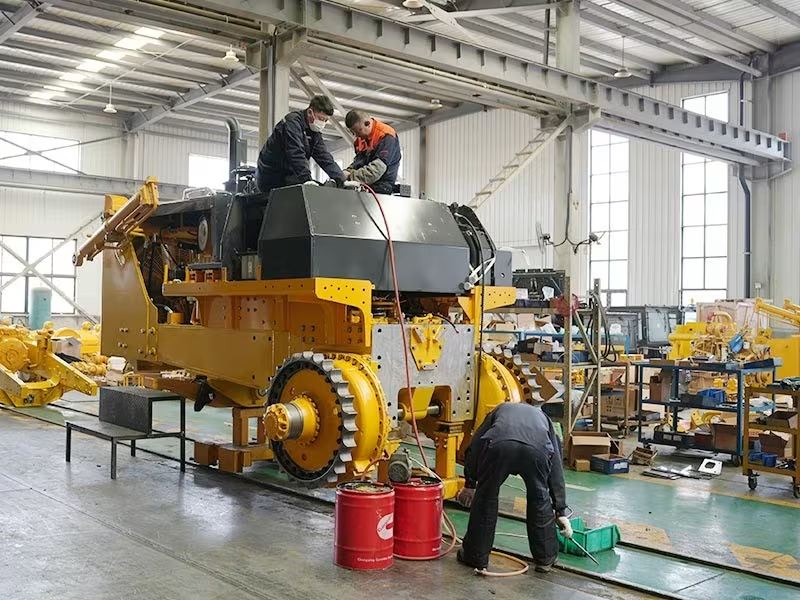
The right machine should match the mine’s material, terrain, working cycle and production plan. Buyers should define the application before asking suppliers to recommend a model.
1. Identify the Primary Mining Task
Start by determining what percentage of operating time will be spent pushing, ripping, grading, clearing or maintaining roads.
A machine used mainly for stockpile cleanup has different requirements from one continuously ripping compacted overburden. Clear duty-cycle information allows the supplier to recommend a more appropriate powertrain, blade and undercarriage.
2. Understand the Material
Material behavior has a direct effect on traction, blade filling and wear.
Loose Soil and Overburden
Loose material is comparatively easy to penetrate, but it may spill from a poorly selected blade. A blade with greater carrying capacity can improve productivity when pushing distances are controlled.
Coal
Coal handling requires attention to blade capacity, contamination control and the risk of material entering cooling components. Specialized coal configurations may use larger blades because coal has a lower density than many soils and rocks.
Weathered Rock
Weathered or fractured rock may be suitable for ripping and pushing. The machine needs adequate traction, structural strength and wear protection for repeated high-load operation.
Hard, Abrasive Rock
Hard rock creates severe impact and abrasion around track shoes, rollers, cutting edges and ripper tips. A rock-version Bulldozer with reinforced components may provide better durability than a general dry-land configuration.
3. Estimate the Required Machine Size
Mining machines are often grouped into medium and heavy-duty classes, but power alone should not determine selection. Operating weight, drawbar performance, ground pressure, blade capacity and attachment requirements must be assessed together.
| Mining condition | General selection direction | Main reason |
|---|---|---|
| Light site preparation | Medium-size crawler | Easier maneuvering and lower ownership cost |
| Haul-road support | Medium or heavy machine | Stable grading and material spreading |
| Large overburden areas | Heavy-duty crawler | Higher pushing capacity |
| Weathered rock ripping | Heavy machine with ripper | Greater traction and penetration force |
| Loose coal handling | Coal configuration with suitable blade | Improved volume-handling efficiency |
| Abrasive quarry floor | Reinforced rock configuration | Better resistance to impact and wear |
| Soft or wet ground | Low-ground-pressure configuration | Improved flotation |
| Large open-pit operation | High-power mining configuration | Designed for continuous heavy workloads |
These are general purchasing directions, not engineering calculations. Buyers should provide the supplier with operating conditions and production targets before confirming a machine.
4. Evaluate Pushing Distance
Bulldozers are most efficient when pushing material over short, controlled distances. As the distance increases, loaders, scrapers or haul trucks may become more economical.
Why Distance Changes Productivity
A longer cycle increases travel time and fuel consumption while reducing the number of pushes completed per hour. Buyers should state typical and maximum pushing distances when requesting a recommendation.
5. Check Altitude and Climate
High altitude, extreme heat, severe cold and dust can affect engine power, cooling and component life. A standard machine may need a specialized cooling system, cold-start package, pre-cleaner or other environmental adaptation.
For hot, sandy conditions, the DT32D Desert Edition Bulldozer incorporates features intended for high-temperature and dust-intensive environments. Mine operators should still provide the expected temperature range, altitude and dust conditions before ordering.
Choosing the Right Bulldozer Blade
The blade affects how easily material enters, remains in and leaves the working tool. Selecting the wrong configuration can reduce productivity even when the base machine has adequate power.
Straight Blade
A straight blade, commonly called an S-blade, is relatively short and has limited side curvature.
Best Use
It is useful for grading, stripping and pushing dense material over short distances. Its compact shape can offer good penetration and control.
Universal Blade
A universal or U-blade has a deep curved profile and large side wings.
Best Use
It is designed to carry a greater volume of loose material with less side spillage. It may be suitable for soil, coal or other materials that can be accumulated efficiently in front of the machine.
Semi-Universal Blade
A semi-universal or SU-blade combines some of the penetration characteristics of a straight blade with the carrying ability of a U-blade.
Best Use
The SU-blade is a versatile choice for heavy earthmoving and some mining applications. It can handle mixed pushing tasks where both penetration and material retention matter.
Angle Blade
An angle blade can direct material toward one side of the machine.
Best Use
It is useful for side casting, ditching and certain road-maintenance operations. It is generally less focused on maximum-volume straight-ahead production.
| Blade type | Penetration | Material retention | Suitable mining work |
|---|---|---|---|
| Straight blade | High | Moderate | Grading and dense-material pushing |
| Universal blade | Moderate | High | Loose material and coal handling |
| Semi-universal blade | High | High | General heavy mining operations |
| Angle blade | Moderate | Low to moderate | Side casting and road work |
Single-Shank vs Multi-Shank Rippers
A ripper expands the machine’s usefulness when compacted ground must be loosened before pushing or loading.
Single-Shank Ripper
A single-shank arrangement concentrates the available force at one point. It is commonly selected for demanding penetration into dense or fractured material.
Purchasing Consideration
Check maximum penetration depth, shank adjustment, ripper-tip availability and rear visibility. The strongest configuration will provide little benefit if replacement wear parts cannot be obtained promptly.
Multi-Shank Ripper
A multi-shank unit works a wider area during each pass. It may be more productive in compacted soil or less resistant material.
Purchasing Consideration
The number of shanks used should match ground resistance. Removing one or more shanks may improve penetration when the material becomes harder.
Standard vs Rock-Version Bulldozer
A standard dry-land machine can perform many mining tasks, but a rock configuration is designed for more severe impact and abrasion.
| Comparison area | Standard dry-land version | Rock version |
|---|---|---|
| Typical surface | Soil and mixed earth | Rocky and abrasive ground |
| Structural protection | General heavy-duty design | Additional reinforcement may be provided |
| Blade application | Grading and earthmoving | Rock pushing and severe-duty work |
| Undercarriage demand | Moderate to heavy | High impact and abrasion |
| Wear-part consumption | Usually lower | Usually higher |
| Best purchasing reason | Versatility | Durability in harsh material |
Dingtui’s DT22W Rock Version Bulldozer is intended for rock-related grading, mining and heavy earthmoving. For larger open-pit work, the DT32 Dry-Land Bulldozer is designed for applications including stripping, spoil management, road construction and site preparation.
When Is a Standard Model Enough?
A standard model may be suitable when most work involves soil, weathered overburden or road maintenance. It can offer a more balanced combination of purchase cost, versatility and operating expense.
When Should You Choose a Rock Version?
Consider a rock configuration when the machine will operate continuously on sharp, abrasive or high-impact surfaces. Reinforcement and protection should be evaluated component by component rather than relying only on the word “rock” in the product name.
DT22 vs DT24 vs DT32: Which Series Fits the Mine
Dingtui offers several Bulldozer series for different project scales. The following comparison is intended as an initial selection reference; final configuration should be based on the specific model and jobsite data.
| Series | General positioning | Potential mining use |
|---|---|---|
| DT22 | Mid-range heavy construction | Mine roads, grading and general earthmoving |
| DT24 | Heavy-duty performance | Mining support and demanding material movement |
| DT32 | Large-scale, high-load operation | Stripping, spoil work and major open-pit projects |
DT22 Series
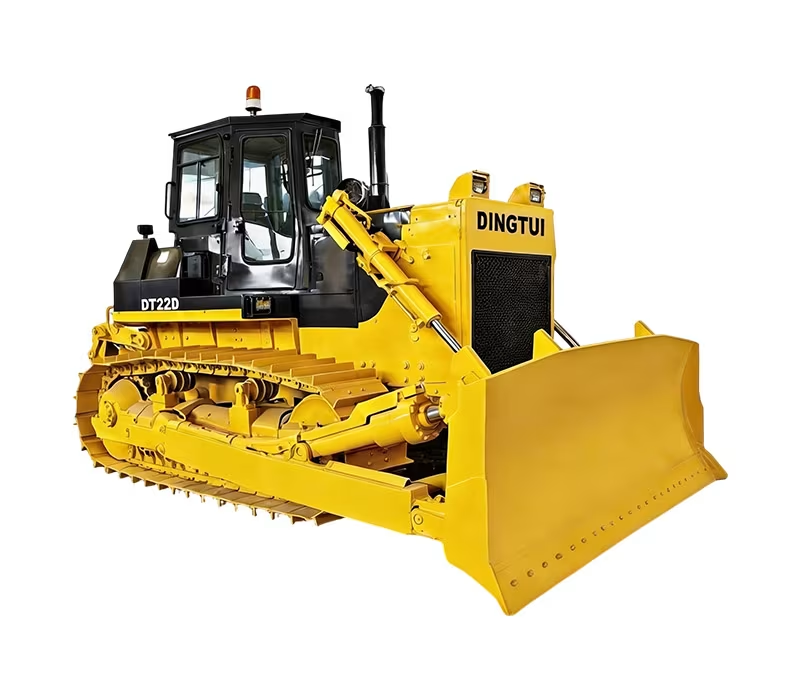
The DT22 range can be considered when maneuverability, versatility and moderate operating cost are important. Rock, desert and other specialized variants allow the basic platform to be adapted to particular environments.
DT24 Series
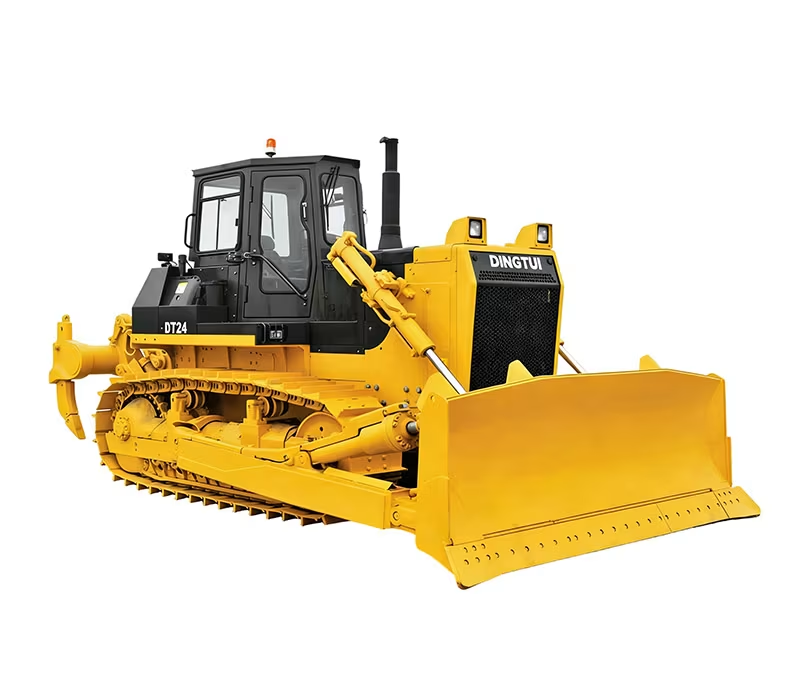
The DT24 range is positioned for heavier mining work. Buyers should request the full configuration sheet and match blade, ripper, undercarriage and environmental package to the mine plan.
DT32 Series
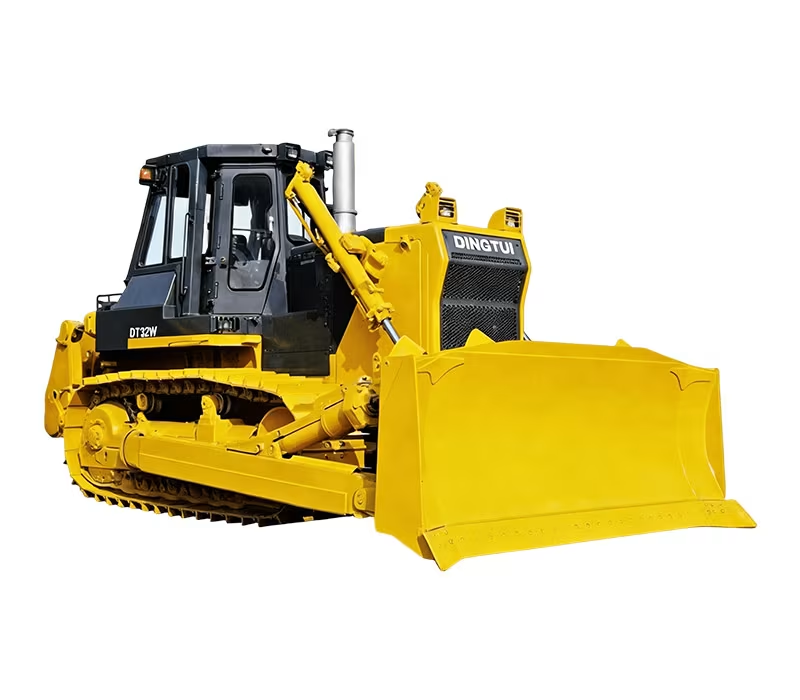
The DT32 range is intended for large-scale projects requiring higher operating weight and heavy-duty performance. The DT32 dry-land model has an operating weight of approximately 40,200 kg when equipped with a single-shank ripper and ROPS, according to its published product specifications.
Do Not Select by Series Name Alone
Models within the same series may differ significantly in blade, track, cooling and application package. Always identify the full model and ordered configuration in the sales contract.
What Specifications Matter Most?
A useful comparison sheet should include more than engine power and blade capacity.
Operating Weight
Operating weight influences traction, stability, transport planning and ground pressure. Confirm which attachments, protective structures and fluids are included in the published figure.
Net or Rated Power
Power affects the machine’s ability to sustain heavy work, but buyers should check the rating method and engine speed. Comparing figures measured under different standards can be misleading.
Ground Pressure
Ground pressure helps indicate flotation, although actual performance also depends on shoe design, material and track slip. Ask whether the stated value includes the selected blade and ripper.
Gradeability
Gradeability describes a machine’s ability to travel on a slope under specified conditions. It should never be treated as a universal safe operating angle.
Safety Comes Before the Published Maximum
Actual safe operation depends on surface condition, load position, travel direction, machine configuration and site rules. A mine-specific risk assessment must define operational limits.
Cooling Capacity
Mining work often combines high engine load with dust and limited airflow. Inspect radiator access, fan performance, debris protection and cleaning procedures.
Service Access
Daily checks should be possible without excessive disassembly. Convenient access to filters, lubrication points and fluid inspection locations can shorten routine maintenance and reduce downtime.
Undercarriage Selection and Ownership Cost
The undercarriage is one of the most heavily loaded systems on a crawler Bulldozer. Tracks, rollers, idlers, sprockets, links and shoes operate continuously in abrasive material.
Track Shoe Width
Wide shoes distribute weight over a larger area and can improve performance on soft ground. Narrower or heavy-duty shoes may be more appropriate for rocky surfaces because they reduce bending and twisting loads.
Sealed and Lubricated Components
Sealed and lubricated track designs can help reduce internal wear when properly maintained. Buyers should confirm component compatibility and the supplier’s recommended inspection intervals.
Wear Parts Availability
Cutting edges, end bits, ripper tips, track shoes and other wear parts should be considered before purchase. Dingtui’s Bulldozer parts range can support maintenance planning for complete machines and major components.
Build a Site Parts Package
A recommended initial parts package should reflect expected operating hours, material abrasiveness and distance from the service network. Generic spare-parts lists may either omit critical items or tie up capital in components unlikely to be needed.
New vs Used Bulldozer for Mining
Both new and used equipment can be viable, but they carry different commercial and operational risks.
| Decision factor | New machine | Used machine |
|---|---|---|
| Initial price | Higher | Lower |
| Condition certainty | Generally higher | Depends on inspection and history |
| Warranty | Usually available | May be limited or unavailable |
| Configuration choice | Can be ordered for the mine | Limited to the existing setup |
| Immediate availability | Depends on production lead time | May be available sooner |
| Early repair risk | Usually lower | Potentially higher |
| Documentation | Normally complete | May be incomplete |
When a New Machine Makes Sense
New equipment is often preferred for continuous production, remote mine sites or projects requiring a specific configuration. Warranty coverage and predictable maintenance planning can reduce operational uncertainty.
When a Used Machine May Work
A used unit may be practical for backup duty, shorter projects or lower annual utilization. A qualified technician should inspect the powertrain, hydraulic system, frame, blade, ripper and undercarriage before purchase.
Review More Than the Hour Meter
Reported hours do not show how the machine was operated or maintained. Oil analysis, service records, structural inspection and undercarriage measurement provide a more complete picture.
Calculate Cost per Productive Hour
The lowest purchase price is not necessarily the lowest-cost choice. Mining buyers should estimate the cost of producing useful work throughout the planned ownership period.
A simplified lifecycle assessment includes:
- Purchase price
- Freight and import charges
- Fuel consumption
- Operator cost
- Planned maintenance
- Undercarriage replacement
- Cutting edges and ripper tips
- Unplanned repairs
- Lost production during downtime
- Resale value
Productivity Changes the Calculation
A larger Bulldozer may use more fuel per hour but complete substantially more work. Conversely, an oversized unit may waste capital and fuel when the site cannot keep it productively loaded.
Downtime Has a Production Cost
When a machine supports loading areas, haul roads or dump zones, its failure can affect other equipment. Parts supply, diagnostic support and repair response should therefore be included in supplier comparisons.
Mining Safety Features to Review
Safety requirements depend on local regulations, mine design and the operator’s risk assessment. Equipment selection should support, but cannot replace, safe procedures and trained personnel.
The U.S. Mine Safety and Health Administration recommends assessing mine-specific mobile-equipment hazards and considering collision-avoidance or warning technologies. Buyers can review its official guidance on mobile equipment at surface mines.
Important features may include:
- ROPS and FOPS protection
- Seat belt and operator restraint
- Reversing alarm
- Working lights
- Camera or visibility system
- Fire suppression provisions
- Emergency shutdown
- Non-slip access steps
- Handrails and service platforms
- Cab filtration
- Reliable braking and steering
- Machine isolation points
Visibility
The blade, ripper and engine enclosure can create blind areas around the machine. Site traffic plans, cameras, mirrors, warning systems and communication procedures should work together.
Operator Comfort
A comfortable operator is better positioned to maintain control during long shifts. Review seating, vibration, noise, visibility, climate control and control effort as operational factors rather than optional luxuries.
Questions to Ask a Bulldozer Supplier
Before requesting a final quotation, send the supplier detailed operating information and ask specific questions:
- Which model is recommended for our material and pushing distance?
- Is the machine configured for soil, coal, rock, desert or wet ground?
- What blade and ripper combination is included?
- What is the operating weight in the quoted configuration?
- Which engine and emission standard are supplied?
- What track shoe width is recommended for our surface?
- Which components are reinforced for mining work?
- What daily maintenance points are accessible from ground level?
- Which spare parts should we stock for the first operating period?
- What warranty and remote technical support are provided?
- Are manuals and parts catalogs supplied in our required language?
- What are the shipping dimensions and transport requirements?
- What is excluded from the quoted price?
- Can the supplier provide a detailed production and delivery schedule?
Dingtui combines complete-machine supply, spare parts and technical assistance. Buyers can review its service and support before comparing after-sales terms.
Final Buying Checklist
Before approving an order, confirm:
- Full machine model and version
- Mining task and material type
- Engine model and emission level
- Operating weight
- Blade type and capacity
- Ripper type and depth
- Track shoe width
- Ground-pressure requirement
- ROPS and FOPS configuration
- Cooling and dust-protection package
- Fire and visibility provisions
- Initial spare-parts package
- Warranty conditions
- Technical documentation
- Shipping dimensions and delivery terms
- Commissioning and operator-training arrangements
Final Thoughts
The best Bulldozer for mining is the one that delivers dependable production under the mine’s actual conditions. Successful selection requires a balanced assessment of machine size, traction, blade design, ripping requirements, environmental adaptation, component durability and after-sales support.
Dingtui offers the DT16, DT22, DT24 and DT32 series, along with application-specific rock, desert and wetland configurations. If you are planning an open-pit mine, quarry, coal operation or mineral infrastructure project, browse the complete Dingtui Bulldozer range or contact Dingtui with your jobsite data for a configuration recommendation and quotation.
FAQ
What is the best Bulldozer for an open-pit mine?
There is no single model that is best for every open-pit mine. A suitable choice depends on material density, rock abrasiveness, pushing distance, required production, altitude, temperature and maintenance resources.
How much horsepower does a mining dozer need?
Required power must be evaluated together with operating weight, traction and blade size. A high-power engine cannot deliver useful productivity if the machine lacks traction or is fitted with the wrong blade.
Is a DT32 too large for a small mine?
It may be if pushing volumes are low, working areas are restricted or transport between sites is frequent. Compare expected hourly utilization and production against a smaller DT22 or DT24 series machine before deciding.
Which blade is best for pushing mine waste?
An SU-blade is often selected for mixed heavy material because it balances penetration and retention. A U-blade may be more efficient for loose, lower-density material, while an S-blade offers control and penetration for dense material.
Do I need a single-shank or three-shank ripper?
A single shank concentrates force for harder material. A three-shank arrangement covers more ground and can be productive in compacted soil or more easily fractured formations.
Can a Bulldozer replace an excavator in mining?
No. A dozer mainly pushes, spreads, grades and rips, while an excavator digs and loads with a boom-and-bucket system. The two machines often work together rather than replacing one another.
How far should a dozer push material?
Short pushes are generally more efficient, but the economical limit varies with material, slope, blade and machine size. Conduct a production and cost comparison when pushing distances become long enough for loaders and trucks to be considered.
What wears out fastest on a mining dozer?
Undercarriage parts, cutting edges and ripper tips are common high-wear items. Actual wear rates depend strongly on material abrasiveness, track slip, operator technique and maintenance.
How can I compare two mining Bulldozer quotations fairly?
Compare the complete configuration, operating weight, blade, ripper, protective equipment, undercarriage, warranty, parts package, freight and after-sales support. Do not compare only engine power or the headline price.
What information should I send when asking for a quote?
Provide the material type, mine location, altitude, temperature range, terrain, pushing distance, required tasks, daily working hours and production target. Photos, geological information and current equipment data can improve model selection.
About Dingtui
The company specializes in the research, development, and manufacturing of large dozers and core components, offering a comprehensive product line covering the full range of heavy construction machinery.
Get in Touch with Us
Contact us for product details, pricing, and technical support. Our team is ready to assist you with reliable solutions for your projects.