
Bulldozer Komatsu for Mining: A Practical Buyer’s Guide
Welcome to our blog. We are Dingtui Construction Machinery, established in 2014 in Jining, Shandong Province, China’s construction machinery hub. With over 10 years of experience, we provide integrated solutions including machine sales, spare parts supply, after-sales service, and manufacturing.
👉 Follow us for updates on products and industry insights.
👉 Contact us for fast quotes and customized solutions.
Stay tuned for more expert content and industry knowledge from Dingtui Construction Machinery.
Table of Contents
Choosing the right dozer for a mine is not simply a matter of buying the machine with the highest horsepower. Ground conditions, pushing distance, material density, altitude, blade configuration, maintenance access, and parts availability all affect the machine’s real productivity.
Key takeaways:
- Match dozer size to material type, haul distance, slope, and production targets.
- Compare operating weight, usable blade capacity, traction, and ripping ability—not horsepower alone.
- Select the undercarriage according to rock, sand, mud, or general dry-land conditions.
- Calculate ownership cost using fuel, wear parts, downtime, maintenance, and transport expenses.
- Inspect used equipment carefully, especially the undercarriage, powertrain, hydraulics, and service history.
- Confirm spare-parts support before placing an international order.
- Request a configuration sheet and inspection records instead of relying only on model descriptions.
Why Choose a Bulldozer Komatsu for Mining?
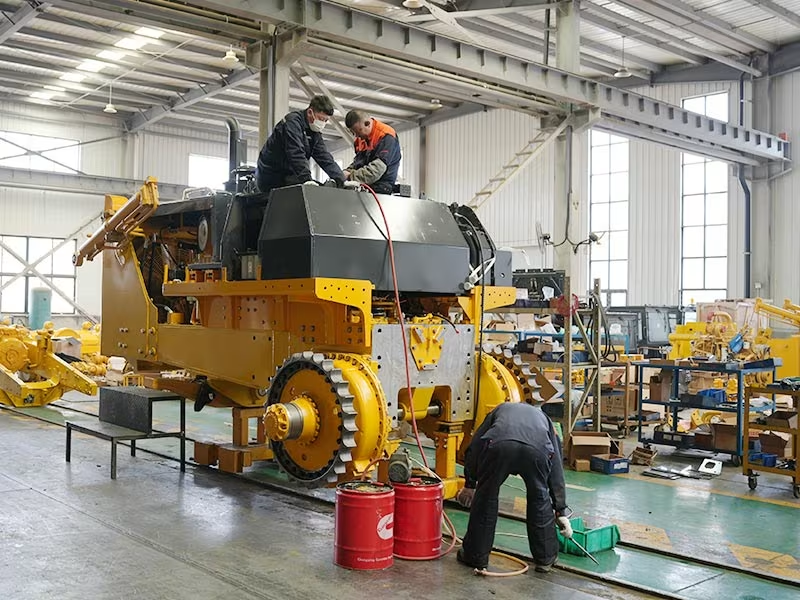
Komatsu dozers are widely used in surface mining, quarrying, road development, stockpile management, and land reclamation. Their crawler design provides the traction and stability required for moving heavy material across uneven working surfaces.
For buyers, however, the brand name is only the starting point. A bulldozer Komatsu configuration suitable for coal stockpiling may not be suitable for ripping compacted overburden or working continuously in an abrasive rock quarry.
Strong Traction on Difficult Ground
A crawler undercarriage spreads machine weight over a larger contact area. This helps the dozer maintain traction on loose, uneven, or sloped mining surfaces.
Track shoe width must still match the ground. Shoes that are too narrow may sink into soft material, while unnecessarily wide shoes can increase stress when working on hard, rocky ground.
Flexible Mining Attachments
Mining dozers can be equipped with straight, semi-U, or full-U blades. Rear attachments may include single-shank or multi-shank rippers for breaking hard soil and weathered rock.
The correct attachment combination allows one base machine to perform stripping, pushing, ripping, leveling, and dump-area maintenance.
Established Model and Parts Support
Komatsu has an extensive range of large and surface-mining dozers. Buyers can review model specifications through the official Komatsu dozer product range before comparing machine availability and job-site requirements.
Parts support should still be checked locally. Availability may differ significantly by country, machine generation, and component type.
Which Komatsu Bulldozer Size Is Best for a Mine?
There is no single best size for every mining project. The correct choice depends on how much material must be moved, how far it must travel, and whether the machine will mainly push, rip, grade, or support other equipment.
The following comparison provides general purchasing guidance. Actual configurations vary by model, market, blade, ripper, and optional equipment.
| Dozer category | Typical mining tasks | Main advantage | Possible limitation |
|---|---|---|---|
| Medium dozer | Road maintenance, site preparation and cleanup | Easier transport and lower operating cost | Limited output in large-scale stripping |
| Large production dozer | Overburden pushing, stockpiling and heavy ripping | Good balance of power and versatility | Higher fuel and undercarriage costs |
| Surface-mining dozer | Large pits, bulk pushing and severe ripping | High production capacity | Requires substantial transport and support infrastructure |
| Low-ground-pressure dozer | Soft soil, wet ground and reclamation | Better flotation on weak surfaces | Wide shoes may be vulnerable on sharp rock |
| Rock-configured dozer | Quarrying and abrasive mine surfaces | Reinforced protection and wear resistance | Higher initial purchase cost |
Medium Dozers for Support Work
Medium machines are practical for haul-road edges, drainage work, loading-area cleanup, and general mine development. They are easier to relocate and may consume less fuel than a production-class machine.
The limitation appears when the dozer must push dense material continuously. A smaller machine can spend more time per cycle, increasing the cost for every cubic metre moved.
Large Dozers for Production Work
Large dozers are commonly selected for overburden removal, dump management, stockpile work, and heavy ripping. For reference, the official Komatsu D155AX-8 specifications list 264 kW of power, an operating weight of approximately 40,506 kg, and blade capacities from 9.4 to 11.9 m³.
These figures help buyers establish a comparison point, but blade capacity should not be treated as guaranteed production. Material density, track slip, operator technique, gradient, and pushing distance influence actual output.
Surface-Mining Dozers for High Output
Large open-pit operations may require purpose-built surface-mining machines. The Komatsu D375A-8, for example, is listed with 455 kW of power, an operating weight of about 74,090 kg, and blade capacities between 18.5 and 22.0 m³.
A machine of this scale can deliver high output, but only when the mine has suitable service facilities, transport arrangements, trained operators, and reliable parts supply.
Match the Bulldozer to the Mining Application
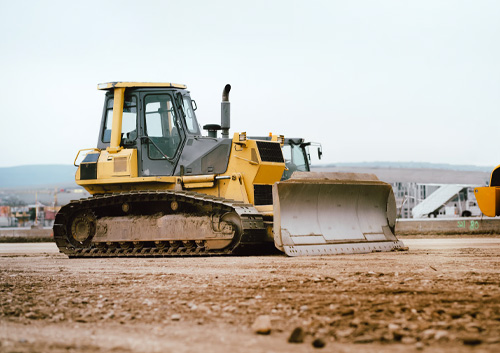
Before asking for a quotation, define the machine’s primary task. Purchasing one general configuration for every operation can result in low productivity or excessive component wear.
Overburden Removal
Overburden stripping requires strong traction, structural durability, and a blade that carries material efficiently. A semi-U blade is often a practical compromise because it combines penetration with better material retention than a straight blade.
Check the Push Distance
Dozers are most efficient over relatively short pushing distances. If material must travel much farther, a scraper, wheel loader, or excavator-and-truck system may be more economical.
The buyer should therefore calculate complete cycle time rather than judging productivity by blade size alone.
Hard-Rock Ripping
Ripping ability depends on machine weight, traction, hydraulic force, ripper geometry, and rock condition. Horsepower alone does not indicate whether a dozer will penetrate the material effectively.
For highly abrasive work, reinforced structures and wear-resistant attachments deserve priority. Buyers comparing alternative mining machines can also review the DT32W rock version bulldozer for a configuration designed around rock handling and hard-soil excavation.
Single-Shank Ripper
A single-shank ripper concentrates force at one point. It is generally better suited to dense material, fractured rock, and deeper penetration.
Multi-Shank Ripper
A multi-shank ripper covers a wider area during each pass. It can be effective in compacted soil or softer formations that do not require maximum point pressure.
Mine-Road Construction
Access-road building involves cutting, filling, spreading, and grading. A versatile blade with hydraulic tilt can help the operator shape slopes and maintain drainage.
In arid regions, cooling capacity and protection against dust and sand also become important. The DT22D desert version bulldozer illustrates features intended for desert roads, mining access routes, and campsite preparation.
Reclamation and Soft Ground
Mine reclamation may involve topsoil spreading, contour restoration, and work on recently filled ground. A low-ground-pressure configuration can reduce sinking and surface disturbance.
Wide tracks are not automatically better, however. The undercarriage must be selected according to bearing capacity, rock content, slope, and turning frequency.
Bulldozer Komatsu Selection Factors Buyers Should Compare
A technical comparison should consider the whole machine rather than one headline specification. The following factors have the greatest effect on suitability and operating cost.
Operating Weight and Usable Traction
A heavier machine can normally develop more usable traction, provided that the ground supports it. This is particularly valuable during ripping and uphill pushing.
Excess weight can create problems on soft ground and increase transportation costs. Buyers should confirm both working weight and shipping dimensions.
Blade Capacity and Material Retention
A large blade can carry more material, but its effectiveness depends on material characteristics. Loose coal, dense clay, blasted rock, and wet overburden behave differently in front of a blade.
Ask whether the published capacity applies to a straight, semi-U, or full-U blade. The blade type can matter as much as the nominal volume.
Undercarriage Configuration
The undercarriage is one of the most expensive wear systems on a crawler dozer. Track shoes, links, rollers, idlers, sprockets, guards, and track tension all influence performance and lifecycle cost.
Mining on sharp rock generally favors stronger protection and suitable shoe width. Wet or loose ground may require greater flotation.
Cooling and Environmental Package
High ambient temperatures, heavy dust, and continuous load place significant demands on the cooling system. A mining specification may require enhanced radiators, reversible fans, pre-cleaners, sealed electrical components, or improved guarding.
High-Altitude Operation
Engine output can be affected by elevation and air density. Buyers operating at altitude should provide the supplier with the mine’s elevation, temperature range, and duty cycle before confirming a machine.
Desert Operation
Desert sites require attention to cooling, filtration, seals, and sand entry. Frequent radiator and air-filter inspection should be included in the maintenance plan.
Operator Visibility and Cab Protection
Visibility affects both productivity and safety around haul trucks, berms, dump edges, and other equipment. A buyer should assess cab sight lines, mirrors, cameras, alarms, lighting, and access steps.
ROPS and FOPS documentation should be checked against the rules applicable in the destination market. Required certificates should appear in the purchase agreement rather than being assumed.
New vs Used Bulldozer Komatsu Equipment
Both new and used machines can be reasonable investments. The better option depends on working hours, budget, project duration, maintenance capability, and downtime tolerance.
| Purchase factor | New machine | Used machine |
|---|---|---|
| Initial price | Higher | Usually lower |
| Condition certainty | More predictable | Depends on inspection and history |
| Warranty | Normally available | May be limited or unavailable |
| Delivery time | Can depend on production schedule | Often available sooner |
| Technology | Current systems and controls | Varies by model year |
| Repair risk | Usually lower initially | Potentially higher |
| Best suited to | Long-term, high-utilization projects | Budget-controlled or shorter projects |
When a New Machine Makes Sense
A new machine is easier to justify when the mine expects high annual utilization and downtime is very costly. Warranty support, known condition, and predictable maintenance planning can reduce operational uncertainty.
The quotation should specify the exact model, configuration, attachment package, warranty scope, commissioning service, and included spare parts.
When a Used Machine Makes Sense
A used bulldozer Komatsu unit may offer better initial value for a limited project or a buyer with strong repair capability. Age alone does not determine condition; working environment and maintenance history are often more important.
A relatively low-hour machine can still have expensive undercarriage damage if it operated on abrasive rock with poor track adjustment.
Used Machine Inspection Priorities
Request cold-start videos, operational tests, serial-number photographs, maintenance records, and detailed undercarriage measurements. Oil leaks, abnormal exhaust, transmission delay, cylinder drift, frame repairs, and metal contamination in fluids require further investigation.
Whenever possible, use an independent inspector who understands heavy crawler equipment.
Komatsu vs Alternative Mining Dozers
Brand comparison should be based on project economics and support conditions. A machine that performs well technically can still become expensive if parts take months to arrive.
| Evaluation area | Komatsu-branded machine | Compatible or alternative dozer |
|---|---|---|
| Brand recognition | Strong in global equipment markets | Depends on manufacturer |
| Initial investment | May be higher | Often more budget-flexible |
| Parts network | Established in many regions | Must be verified by supplier |
| Component compatibility | Model-specific genuine parts | Some products may support common platforms |
| Resale potential | Often stronger in active markets | Depends on local demand |
| Custom configuration | Based on available factory options | May offer flexible project-specific options |
Dingtui supplies complete bulldozers, core components, and bulldozer parts for international construction and mining customers. Buyers should confirm compatibility using the machine model, serial number, part number, dimensions, and photographs before ordering replacement components.
Compatibility does not automatically mean that a machine or part is manufactured or authorized by Komatsu. Clear documentation protects the buyer from ordering the wrong specification.
How to Calculate the Real Cost of a Mining Dozer
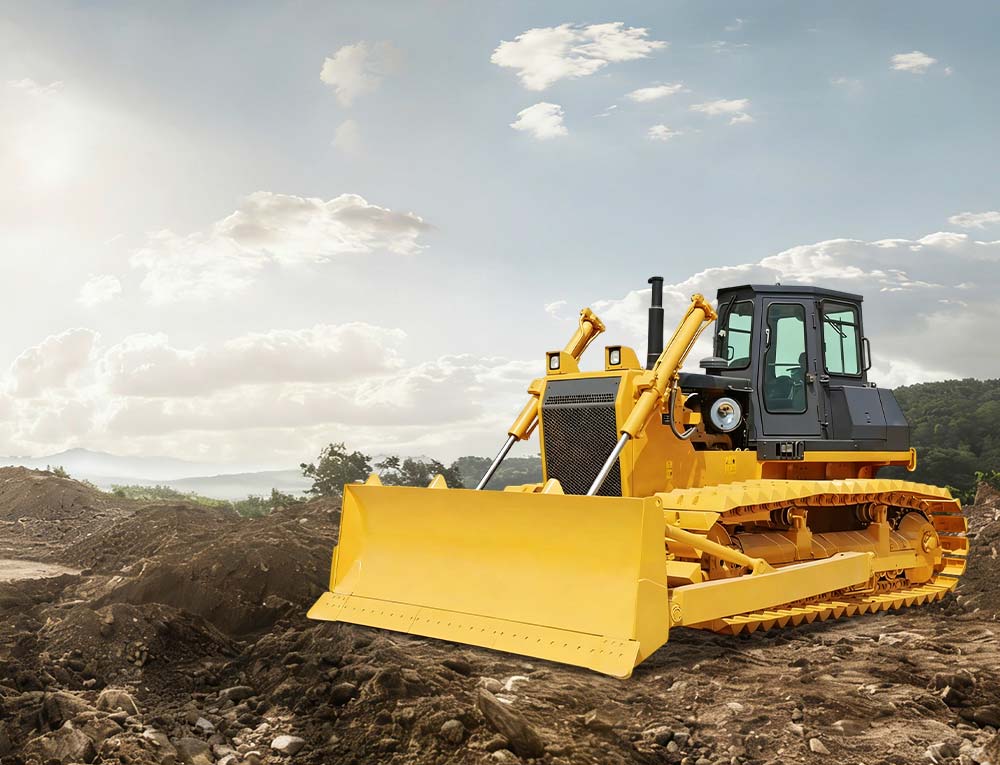
Purchase price is only one part of the investment. The more useful measure is cost per productive hour or cost per cubic metre moved.
Total Cost of Ownership
Total cost of ownership includes acquisition, financing, shipping, taxes, fuel, labor, scheduled service, wear parts, repairs, insurance, downtime, and eventual resale value.
A cheaper machine can become more expensive if it consumes more wear parts or remains idle while waiting for components.
Cost per Productive Hour
Start with annual ownership and operating costs, then divide them by productive—not scheduled—hours. This prevents downtime from disappearing inside an overly optimistic calculation.
A Simple Evaluation Formula
Cost per productive hour = annual ownership and operating cost ÷ productive working hours
For a more useful procurement comparison, also estimate:
Cost per cubic metre = cost per productive hour ÷ actual hourly production
Production estimates should be adjusted using local material density, gradient, push distance, operator experience, and track-slip data.
Mining Dozer Procurement Checklist
Before approving an order, ask the supplier to confirm the following items in writing:
- Exact model, year, serial number, and operating hours
- Engine and transmission specifications
- Working weight and shipping dimensions
- Blade type, capacity, and cutting-edge condition
- Ripper type and included shanks
- Track shoe width and undercarriage condition
- Cooling and filtration configuration
- Cab protection and safety equipment
- Included spare parts and special tools
- Warranty coverage and exclusions
- Inspection, testing, and commissioning procedures
- Delivery term, packing method, and estimated lead time
- Parts availability for the destination country
- After-sales communication and technical support process
Buyers evaluating complete machines or replacement components can contact Dingtui with their mining conditions, required configuration, target delivery country, and existing fleet information.
Safety and Maintenance Considerations
Safe operation begins with suitable equipment, trained personnel, and mine-specific procedures. Pre-shift inspection should cover tracks, guards, cylinders, hoses, brakes, alarms, lights, mirrors, fluid levels, and attachment condition.
The applicable rules vary by country. As a general reference, the U.S. Occupational Safety and Health Administration states that bulldozer blades should be fully lowered or securely blocked during repair or when not in use; further details appear in OSHA’s equipment safety requirements.
Plan Wear-Part Inventory
Undercarriage parts, cutting edges, end bits, filters, hoses, seals, and ripper tips should be planned according to expected usage. Critical stock becomes especially important at remote mines with long international delivery times.
Record Condition Trends
Scheduled measurements can reveal abnormal wear before failure. Track tension, shoe condition, roller wear, oil analysis, fuel consumption, and machine fault codes should be recorded consistently.
Avoid Maintenance by Calendar Alone
Two dozers with the same operating hours may experience very different wear. Rock abrasiveness, turning behavior, track slip, operator technique, and cleaning practices can change component life dramatically.
Condition-based data should supplement the manufacturer’s maintenance schedule.
Final Buying Advice
The right bulldozer Komatsu choice is the machine that reaches the mine’s production target at an acceptable lifecycle cost. Horsepower and blade size matter, but they should be evaluated alongside traction, ripping performance, ground pressure, wear resistance, service access, and local parts supply.
Prepare a detailed operating-condition sheet before requesting quotations. Then compare each offer using the same configuration, performance assumptions, warranty terms, inspection standard, and cost calculation. This approach gives mining buyers a much stronger basis for selecting dependable equipment and avoiding expensive specification mistakes.
FAQ
What size Komatsu bulldozer do I need for an open-pit mine?
The answer depends on material density, daily production target, push distance, gradient, and ripping requirements. A medium or large dozer may support roads and dumps, while high-volume overburden work may require a surface-mining model.
Is a Komatsu D85 large enough for mining work?
A D85-class machine can perform road maintenance, site development, cleanup, grading, and some production tasks. For continuous bulk pushing or severe ripping, buyers should compare its expected output with larger models before ordering.
Which blade is best for pushing mine overburden?
A semi-U blade is a versatile option because it offers useful penetration and material retention. A full-U blade can carry more loose material, while a straight blade may provide better penetration and control in certain dense or rocky conditions.
Do I need a single-shank or three-shank ripper?
A single-shank ripper is generally preferred for deeper penetration into hard formations. A three-shank arrangement covers more ground and may work efficiently in compacted soil or softer material.
How do I know whether a used mining bulldozer is worth buying?
Calculate the likely repair cost in addition to the purchase price. Inspect the undercarriage, transmission response, engine condition, hydraulics, frame, blade, ripper, service history, and fault records before making a decision.
Why is the undercarriage so important when buying a dozer?
The undercarriage operates continuously against abrasive ground and contains multiple costly wear components. Severe wear can turn an apparently inexpensive machine into a high-cost purchase soon after delivery.
Can compatible parts be used in a Komatsu bulldozer?
Compatible parts may be suitable when the model, serial range, dimensions, materials, and part numbers are verified. Buyers should request technical confirmation because compatibility varies across machine generations and configurations.
What information should I send when requesting a bulldozer quotation?
Provide the material type, mining task, production target, push distance, slope, altitude, temperature range, ground condition, required blade and ripper, destination port, and preferred budget. These details help the supplier recommend a more appropriate configuration.
How can I reduce bulldozer fuel cost in a mine?
Match the machine to the job, keep push distances economical, reduce track slip, maintain cutting tools, avoid excessive idling, and train operators to use efficient loading and pushing techniques. Fuel consumption should be measured together with production, not as an isolated hourly figure.
About Dingtui
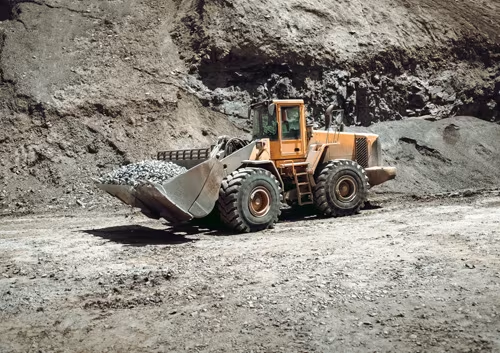
The company specializes in the research, development, and manufacturing of large dozers and core components, offering a comprehensive product line covering the full range of heavy construction machinery.
Get in Touch with Us
Contact us for product details, pricing, and technical support. Our team is ready to assist you with reliable solutions for your projects.